The Unexpected Path: Using the Jazz Mindset to Lead Toward Sustainability
With Alex Steele
Credit: IMS Luxembourg
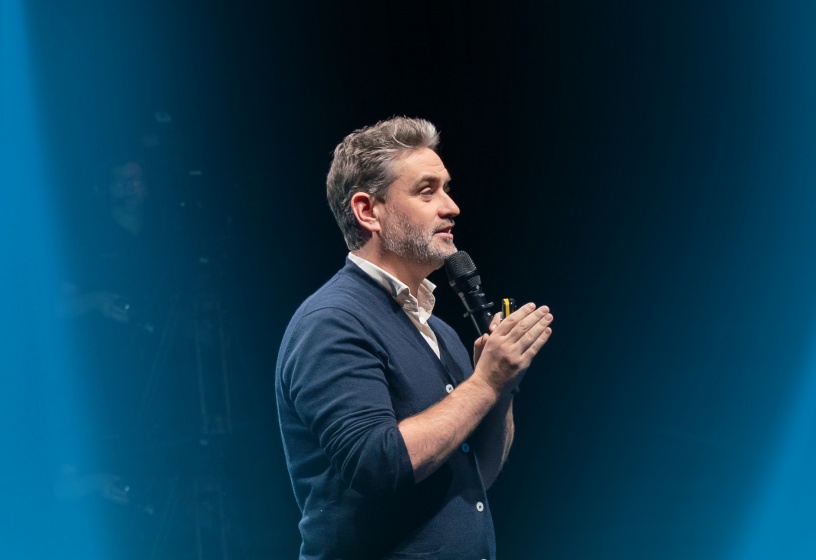
Alex Steele, bridging psychology, jazz, and sustainability, explores how improvisation reshapes organisations. In this interview, he reveals why uncertainty fuels opportunity, how chaos sparks innovation, and how music can awaken minds for a sustainable future.
Alex, you move between several worlds: academia, organisational psychology, and finally the world of jazz. Can you tell us how all these seemingly distant worlds came together in your career?
As a child, I grew up in a musical family. My father said to me: "it's a challenging life to be a musician only. So, if you have other passions, I recommend you pursue them". My love for ecology and nature came in my early 20s. I traveled for one year with a backpack and realised how precious the world is. When I returned, I did my first degree in environmental sciences. My early career was in environmental management and sustainability. This was when I realised how difficult it was to change human behavior. So, I transitioned into psychology and behavioral change. Mixing psychology with sustainability was valuable to help people understand the power of how we change mindsets and behaviors. Meanwhile, I had this separate career as a jazz musician, where it is about the mindset but above all about how you feel: the "heartset". Jazz musicians are connecting, collaborating, innovating, listening and being present together. It dawned on me that there are so many dimensions of the human experience of improvisation that would be valuable to share with organisations. To be a great leader, you need to be a great human being. You need to be present, you need to listen. Sometimes you need to be quiet. This is how I began to design experiential learning for organisations.
"To be a great leader, you need to be a great human being. You need to be present, you need to listen."
At the Luxembourg Sustainability Forum, you created an experience where the audience influences music in real time. Why?
The purpose is for people not just to think, but to feel, that is why the audience needs to be fully involved and engaged. There is something magical about the use of music because people feel it. Music goes straight to the heart. People have an emotional response and that's powerful. If I was standing up giving a lecture and I had no piano, I could talk about the same content, but it wouldn't really touch people in the same way. The music is incredible. The improvisational model takes us away from ego to eco, the ecosystem of a community. It takes people from "me" to "us".
Credit: IMS Luxembourg
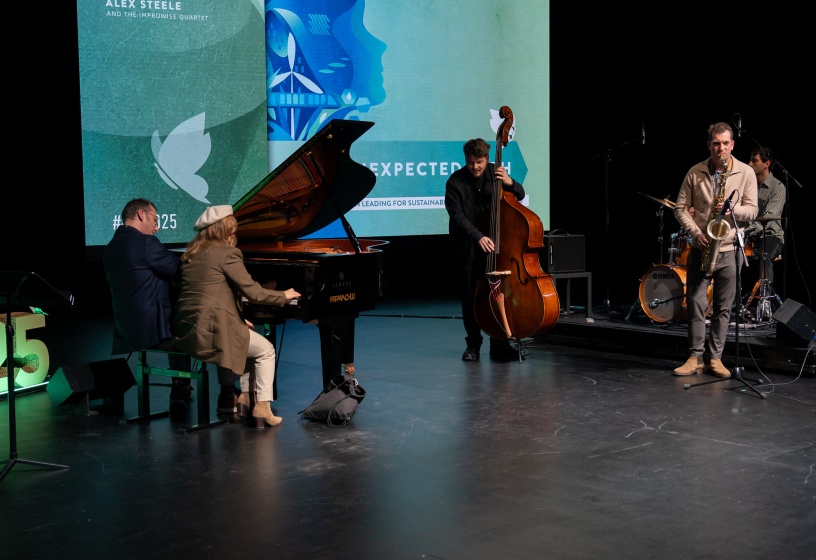
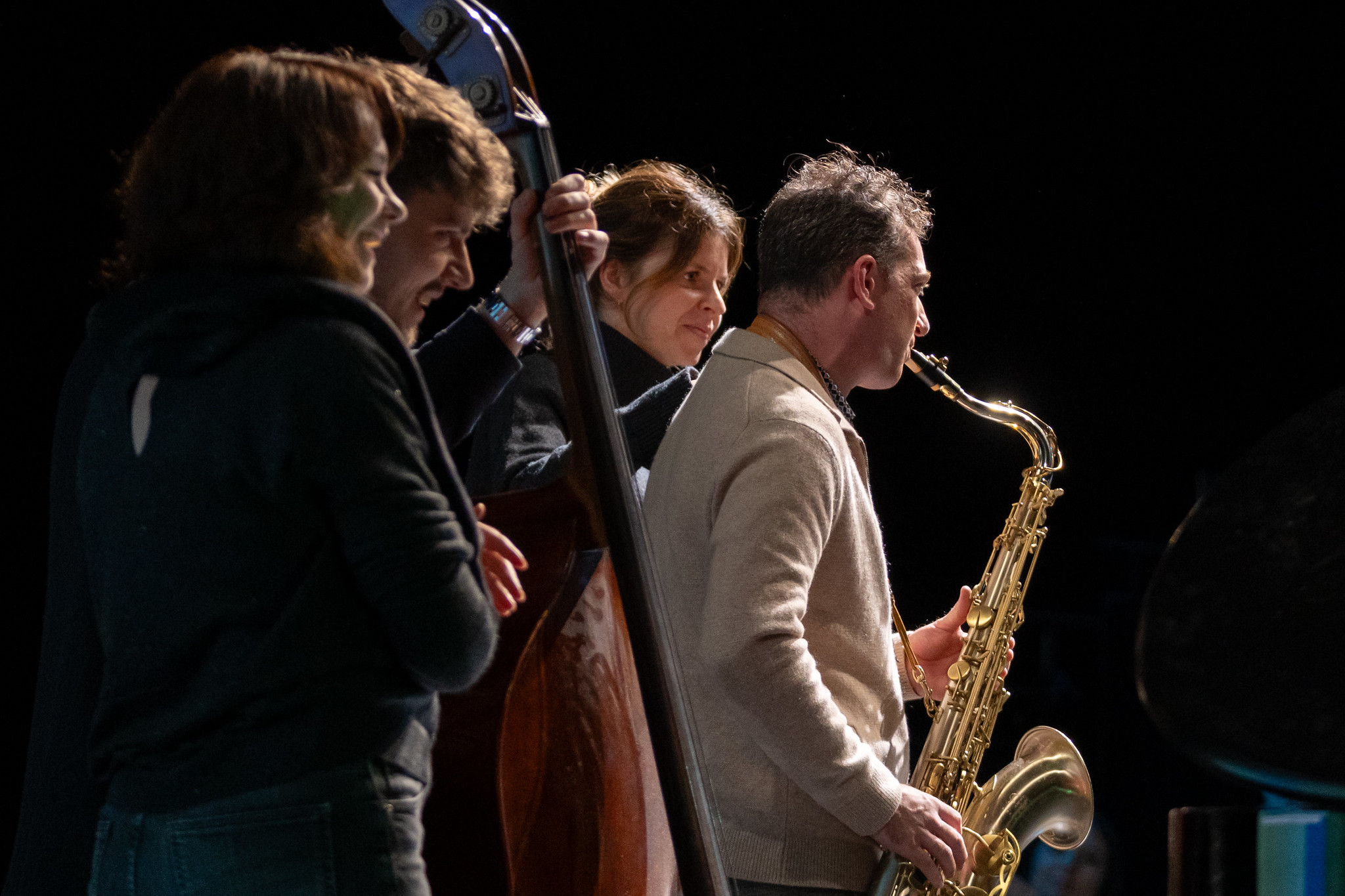
Alex Steele and the Improwise Quartet explore how improvisation can inspire new forms of leadership and collaboration at the Luxembourg Sustainability Forum.
Why do you think it is so important for organisations and individuals to cultivate this ability to improvise?
The world is uncertain. Plans don't unfold the way you thought. The improvisational mindset allows us to innovate in a way we cannot do otherwise. If you stick to the plan or the structure, it doesn't fit the real world.
Being childlike, being curious isn't easy to do as an adult. You must create a culture of improvisation where it is okay to ask crazy questions. Every shift in society comes from "Oh, it hasn't been done before, but we should try". That is why letting go of our expert mind and cultivating the beginners mind is hugely valuable.
It can make you feel vulnerable, but it gives you confidence to explore and to be curious. In the mind of the expert, there are few possibilities; in the mind of a beginner, there are many.
Chaos and uncertainty open possibilities. Accepting them allow us to find value in the unexpected. Purpose is key: If your purpose is sustainability, you must explore the unknown, let go of old ways, and improvise while connecting with others.
Credit: IMS Luxembourg
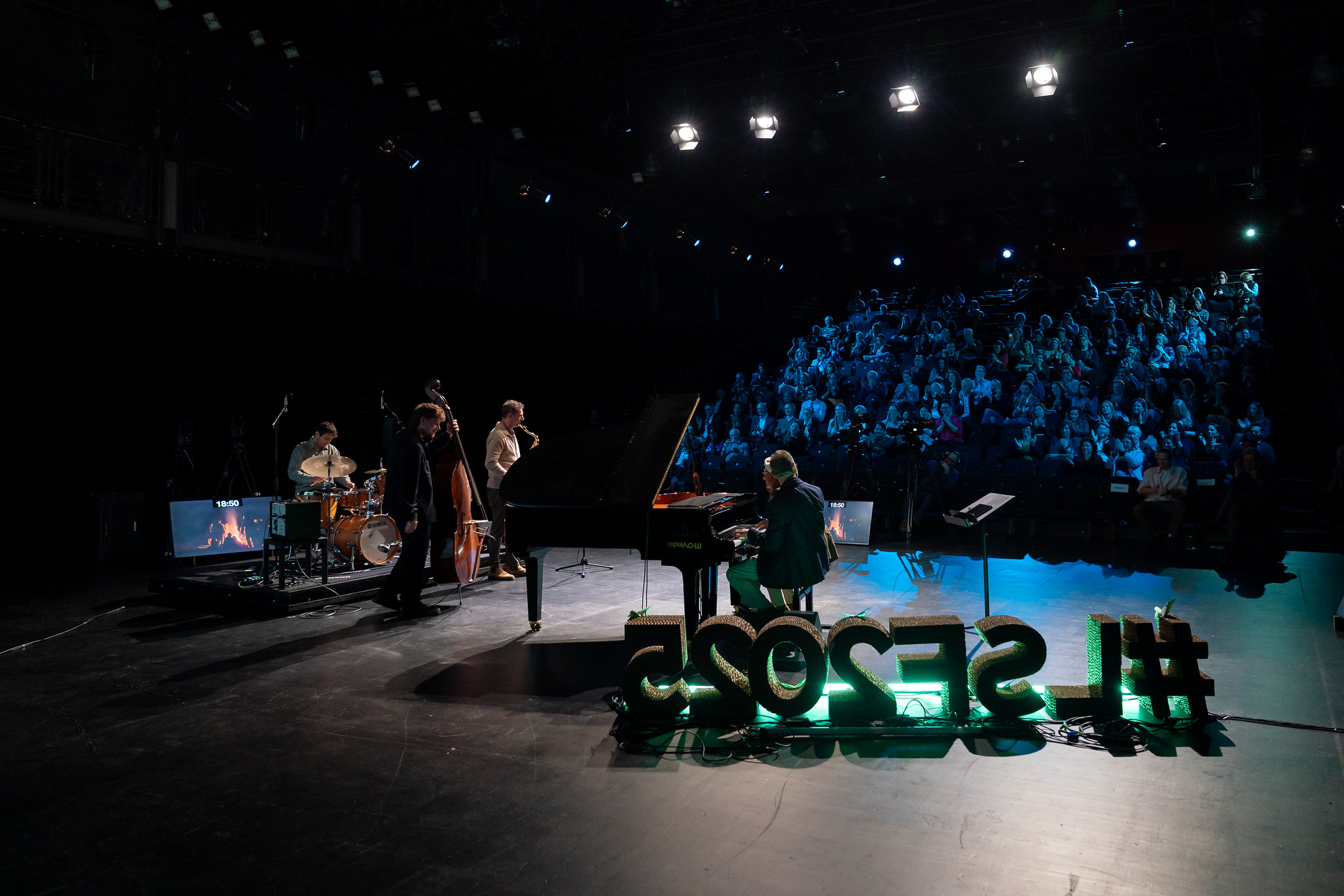
Participants of the Luxembourg Sustainability Forum are invited to come on stage and guide Alex Steele and his Jazz Quartet.
How do you think this mindset can be translated into concrete terms in the way organisations operate?
It is about language. I use tools like the "yes, but" swear box. Teams put money for charity in a box every time someone says "yes, but" which blocks room for innovation. It forces "yes, and" conversations, which unlock creativity, innovation, and happiness. My research is telling me that it makes people more productive, more creative, more innovative, more curious, more experimental.
How do you perceive the resonance of your message with the audience in Luxembourg?
The most powerful part was what happened afterwards. People came to hug me. They had an emotional response to the experience. That is the beauty of human connection. Some things were difficult to put into words. My hope is that they will remember what happened and experiment, be curious, and try to do things differently. That is very powerful.
Finally, if you had to choose one piece of music to inspire our readers to act towards a more sustainable future, which one would it be?
I would pick two. ‘Kind of Blue’ by Miles Davis (1959). It’s a transition to a new open, improvised, and collaborative jazz language. Miles gave musicians minimal structure, and they created beauty in uncertainty. And ‘The Cologne Concert’ by Keith Jarrett (1975). He played on a broken piano, turning constraints into beauty.
Watch the replay of the Luxembourg Sustainability Forum with Alex Steele and the Improwise Quartet here.
Alex Steele
Alex Steele navigates between two surprisingly interconnected worlds: organisational psychology and sustainable development on one side, and jazz improvisation on the other. He is an organisational development consultant, academic and executive coach, as well as a professional pianist, composer and recording artist. On selected occasions, he brings these fields together to explore how improvisational mindsets can transform leadership and collaboration. A visiting professor and partner to several international institutions, Alex blends cutting-edge thinking with the art of improvisation to inspire curiosity, innovation and experimentation in individuals and teams.
To be read also in the dossier "Facing Backlash, Staying the Course Towards Sustainability"