Hugo Paul : In the Footsteps of a Community Explorer
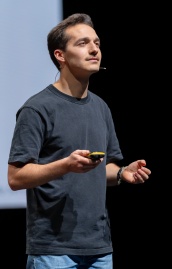
At 27, Hugo Paul describes himself as a "community explorer." Confronted with what he calls as a crisis of social connection, he champions the power of the collective: a force he believes can transform society. From the Sami people to the Compagnons du Devoir and Cistercian monks, his journey has taken him to meet groups that embody a deep sense of belonging. Along the way, he’s gathered lessons on how to "build a tribe." Let’s follow in his footsteps…
From eco-anxiety to an exploration project
When speaking with Hugo Paul, you quickly realise he belongs to a generation deeply affected by the magnitude of today’s environmental and social crises, and unwilling to stand idle in the face of such daunting challenges.
A single book, he says, changed everything for him at the age of 18: Comment tout peut s’effondrer (How Everything Can Collapse) by Pablo Servigne and Raphaël Stevens. Reading it, he realised that the fossil-fuelled, individualistic model on which he had planned to build his future was headed for collapse. "I’ve got what people often call eco-anxiety: I’m deeply afraid. And in response to that fear, as a pure act of self-defence, I decided to take action."
While studying engineering, Hugo activated three levers in succession: academic (raising awareness among his professors and classmates about environmental issues), political (contributing to policy proposals within universities), and economic (implementing a glass bottle deposit system on his campus). Throughout each initiative, he came to understand one essential truth: nothing holds without a strong collective. Every project he led depended on coalition building.
Six months before graduating, he allowed himself three days of solitary walking to reflect on his journey, and realised that societal transformations always stem from communities. Yet another realisation struck him: just as ecological, technological and geopolitical crises demand unprecedented cooperation, modern individualism is undermining our very capacity to act together. "The crisis of connection we’re living through is unlike anything before", he explains. Indeed, according to the World Health Organisation (WHO) Commission on Social Connection, nearly one in six people worldwide feels lonely, and empathy levels have dropped by 40% over the past thirty years, according to a meta-analysis by Konrath et al. based on American university students. This awareness set him off on a new path: to meet communities that, for centuries or even millennia, have mastered the art of living and acting together.
From monasteries to indigenous peoples: searching for the principles of togetherness
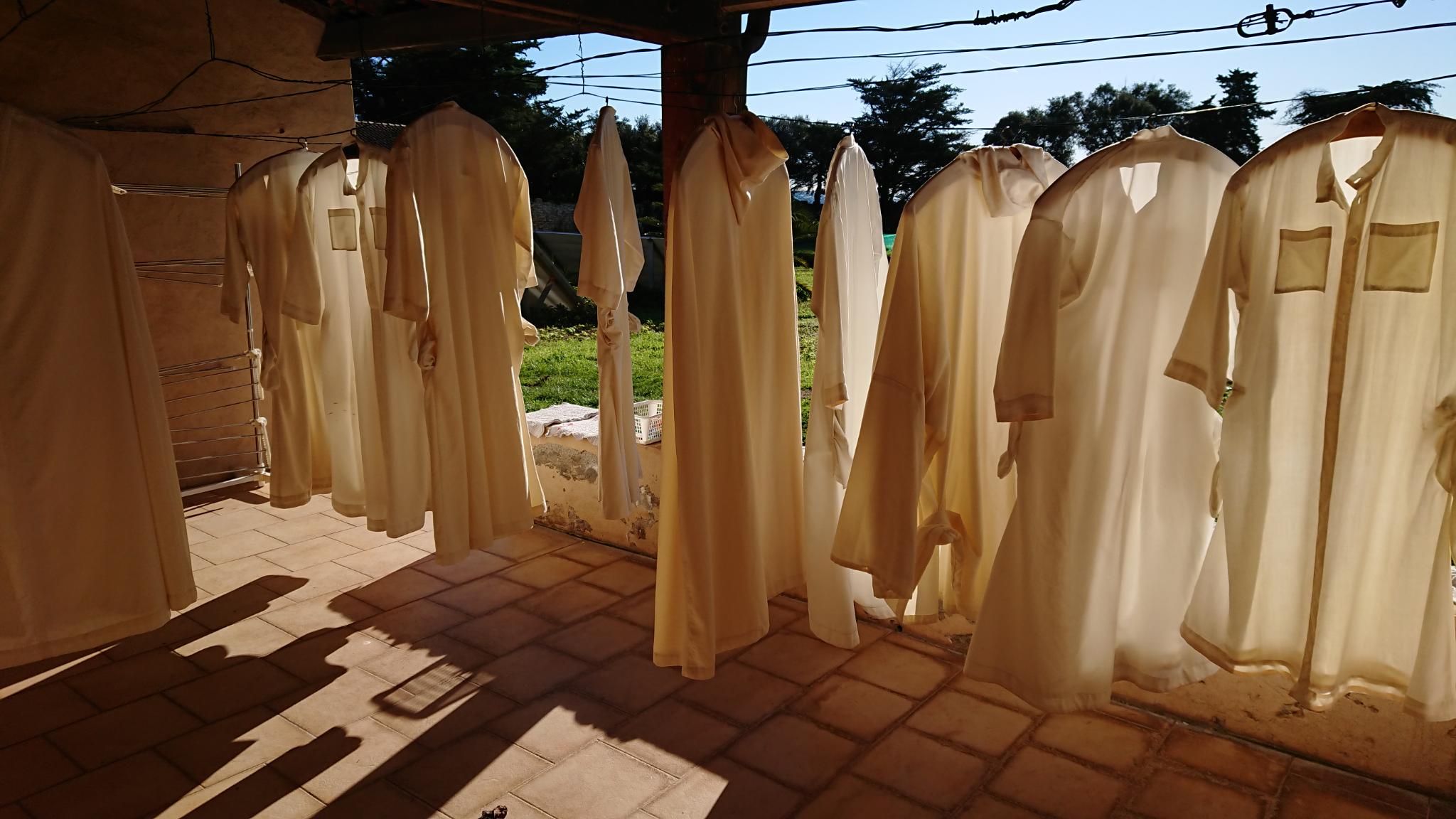
The first door Hugo Paul knocked on was that of the Abbey of Lérins, on the island of Saint-Honorat in the Mediterranean. Immersed for a month within the cloister, he followed seven daily prayers and worked the vineyards, olive groves, and distillery according to the Benedictine rule ora et labora (pray and work). There, he discovered the power of sharing a collective vision (the world one seeks to build) and a mission (the practical path to achieving it). The abbey welcomes only those with a true calling, nurturing a virtuous circle where fraternity serves the individual and the individual, in turn, serves the fraternity.
Another key stop in his exploration: Les Compagnons du Devoir, heirs to the medieval builders of cathedrals. Each year, thousands of young people aged 15 to 25 join this community to learn a trade, guided by three pillars: professional training, communal living, and the traditional "Tour de France" with different masters.
For Hugo, they embody the very essence of community: the cohesion of a large tribe depends on the stability of its smaller sub-groups, just like departments and teams within a company.
Credit: Hugo Paul
The Lérins Abbey marks Hugo Paul’s first immersion into a monastic community, a setting he chose to grasp its guiding principles from within.
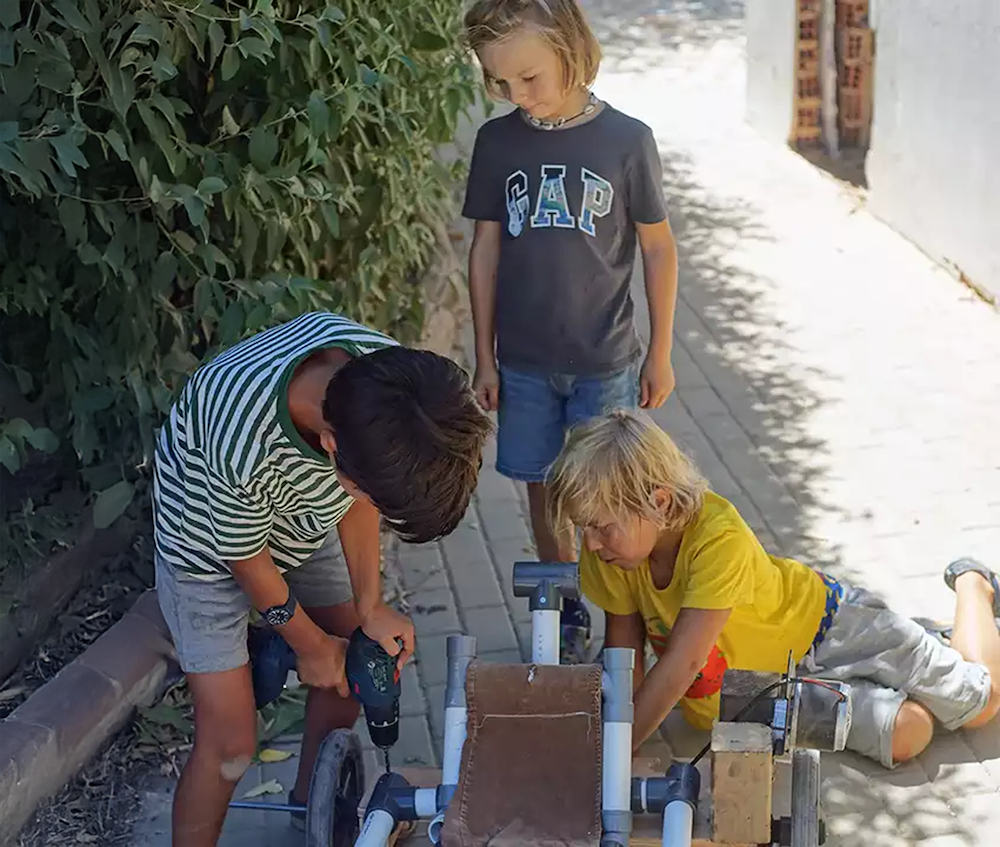
Further south, in Spain, he discovered the Alma Forest School, which welcomes 150 children aged 6 to 14 and is rooted in a pedagogy that emphasises autonomy. Each week, students devote an entire day to a personal project, structured around three key principles: reflecting on their motivation, identifying the resources they’ll need (including external support), and assessing the impact on their community. Hugo was struck by a six-year-old pupil who managed to resolve a playground dispute through spontaneous dialogue and mediation — proof that self-regulation emerges from a balanced blend of tools, experimentation, and responsibility.
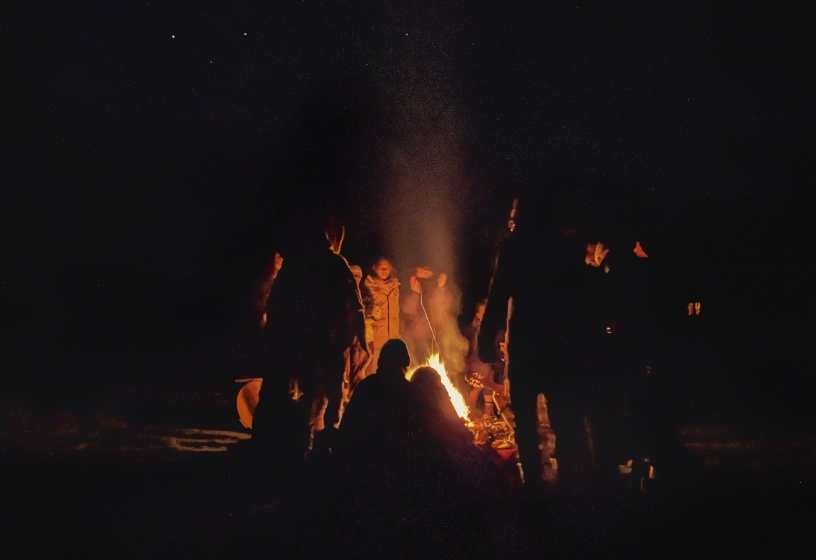
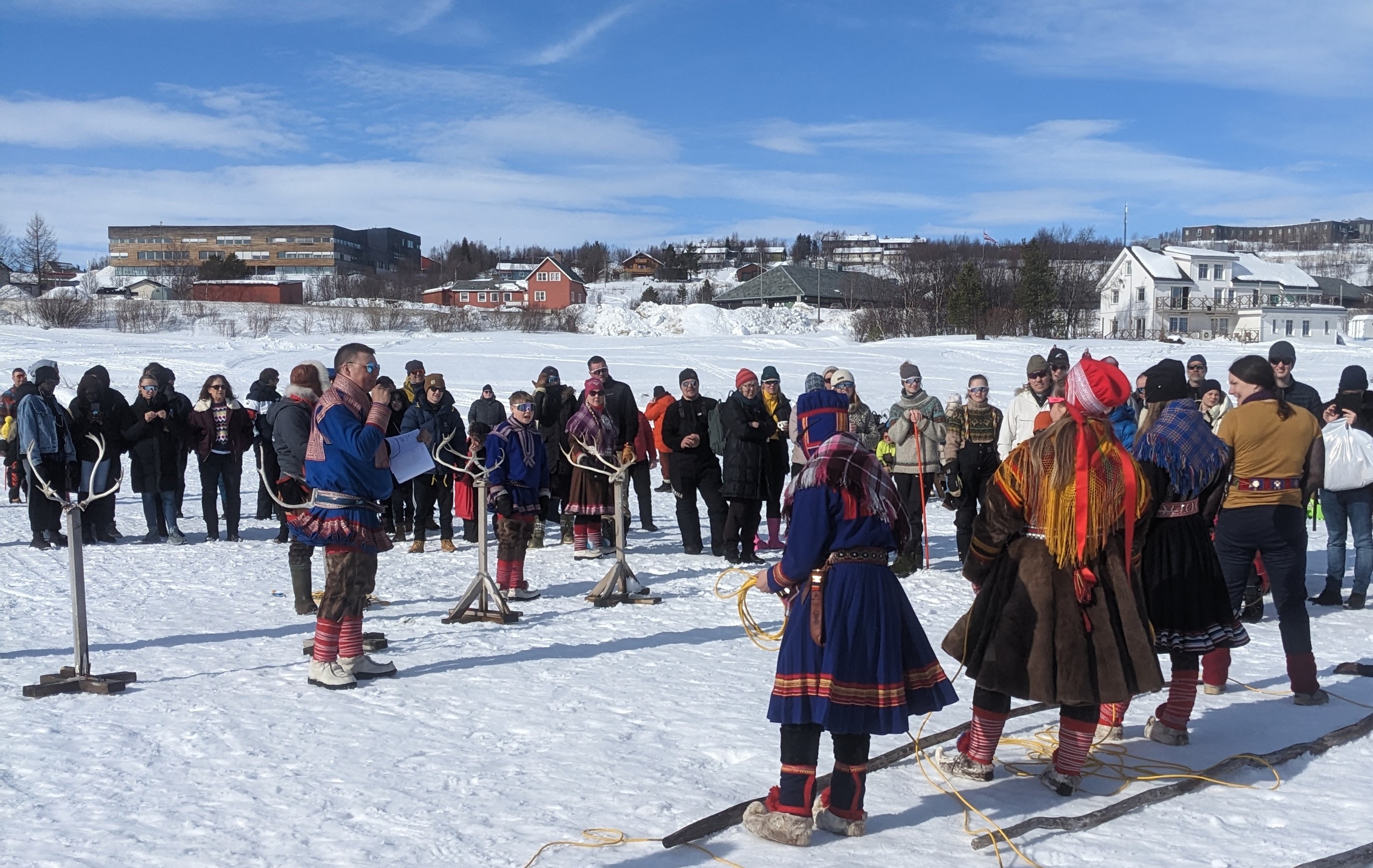
Hugo met many different communities, but the story he most loves to tell is his encounter with the Sami people: Europe’s last Indigenous community, established in Lapland for over 12,000 years. He wanted to understand how such a group can endure without losing its identity, and how its traditions and languages are passed on. The Sami still use nearly 300 terms to describe different types of snow. Their method? Learning them by immersion in the tundra, through the power of lived experience. Another lesson: the importance of ritualising "being together." Each evening, the Sami gather around a fire, where several generations share songs and stories, nurturing the egregore — a collective energy or "group spirit" that transcends the sum of its members.
Credit: Hugo Paul
Lessons for teams and organisations
Beyond the wonder of discovery, Hugo Paul distilled his learnings into core principles that can be applied within organisations — while warning against any overly rigid interpretation. "There isn’t just one way to build a tribe," he insists. "There isn’t one way to work together. What I’m sharing are principles, not rules: it’s an art, something that must be adapted to each context."
The urgency of rebuilding social bonds has never been greater. The WHO now classifies loneliness as "a global public health issue," noting that prolonged social isolation is as harmful as smoking fifteen cigarettes a day. The United Kingdom even created a "Ministry of Loneliness." Conversely, a study published in Social Psychological and Personality Science by researchers from Sabanci University (Turkey) found that the number of minimal social interactions (simple gestures like greeting or thanking strangers) directly correlates with personal well-being. In other words, a few "hellos" a day can make you happier.
8 Principles for Building a Tribe
1. Vision and mission: Distinguish the what (the world we aspire to) from the how (the daily path to get there).
2. Principles over rules: Every community develops its own art of collaboration, tailored to its needs and context.
3. Defined membrane: Set clear boundaries (identity, shared values, and methods) as a foundation for building bridges outward.
4. The S.A.M. commitment: Every member should find meaning for Self, the Other, and the World(in French: pour Soi, l’Autre et le Monde).
5. Fractals and sub-groups: Nurturing and connecting internal teams prevents many conflicts.
6. Egregore and rituals: Celebrations, campfires, or gatherings unite people beyond their differences.
7. Self-regulation and autonomy: Equip everyone with the tools and space to take initiative.
8. Collective intelligence A group’s IQ isn’t the sum of its members’ intelligence, but the multiplication of their talents through balanced speaking time (mixed and particularly female-inclusive teams perform 25% better on average).
In a world evolving faster than ever, no isolated solution can suffice. The strength of the collective remains our greatest asset: to innovate, experiment, and bring new practices to life.
Credit: Hugo Paul
Hugo Paul meets the Sámi, Europe’s last remaining Indigenous people.
What’s next for exploration?
For Hugo Paul, the challenge isn’t only to build effective tribes, it’s to build tribes among tribes. His ambition: to create an inter-world exploration space where political, civic, and business leaders can first understand and support one another before they collaborate. Inspired by the Sami campfires, he believes in the power of such rituals to transcend bias, bridge perspectives, and co-create responses to today’s environmental and democratic urgencies.
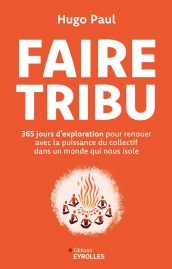
From eco-anxiety to his vision of a global eco-tribe, Hugo Paul now carries a simple yet powerful message in his 2025 book Faire Tribu (Building the Tribe): the capacity for cooperation lies within us. By practising it (by sharing vision and mission, and by living our values day to day) every organisation, whether a company, association, or institution, can rediscover its sense of "we".
Must Read, Must See
Faire Tribu
Luxembourg Sustainability Forum 2025
Must Read, Must See
Faire Tribu
Hugo Paul - Ed. Eyrolle, 2025
Must Read, Must See
Luxembourg Sustainability Forum 2025
IMS Luxembourg
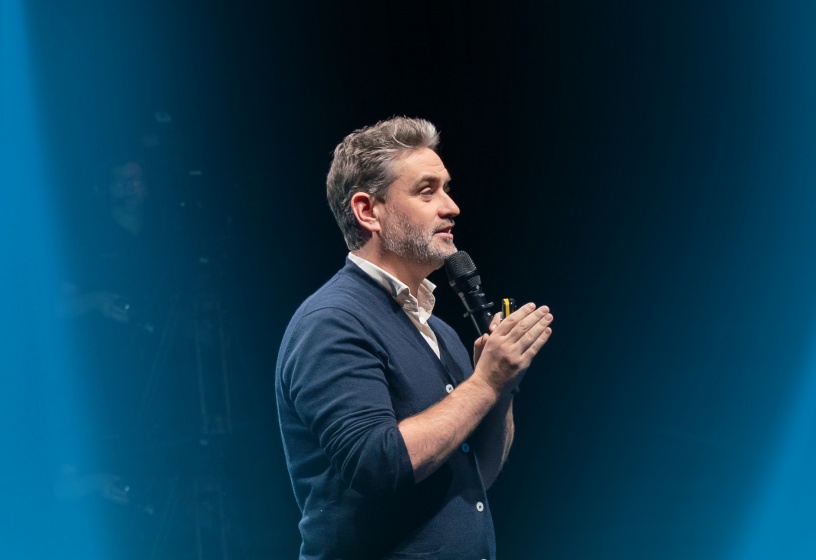
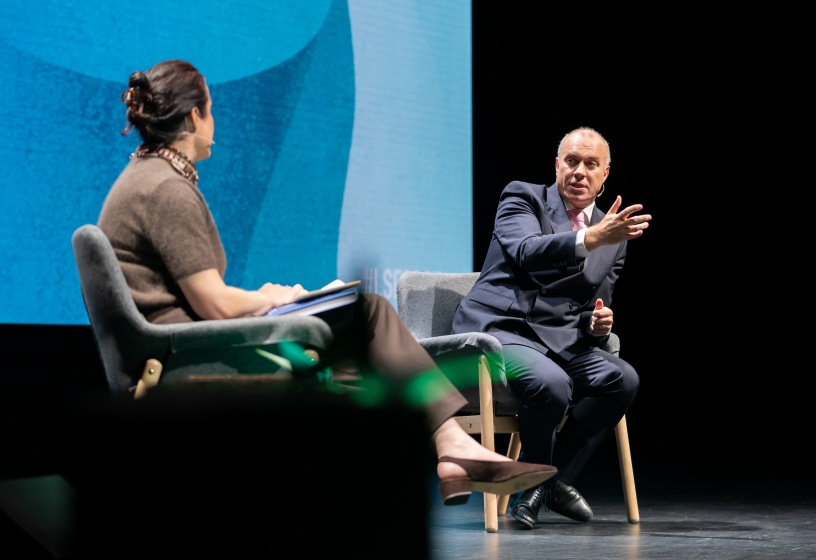
Hugo Paul tells us how to build a tribe at the latest edition of the Luxembourg Sustainability Forum, which you can watch (again) here.
To be read also in the dossier "Facing Backlash, Staying the Course Towards Sustainability"