A wave of rejection and scepticism is shaking the sustainability agenda. As the anti- ecological discourse gains visibility, the stakes are high: promoting a constructive narrative and offering inspiring perspectives to turn urgency into concrete action.
Turbulence and Ecological Setbacks
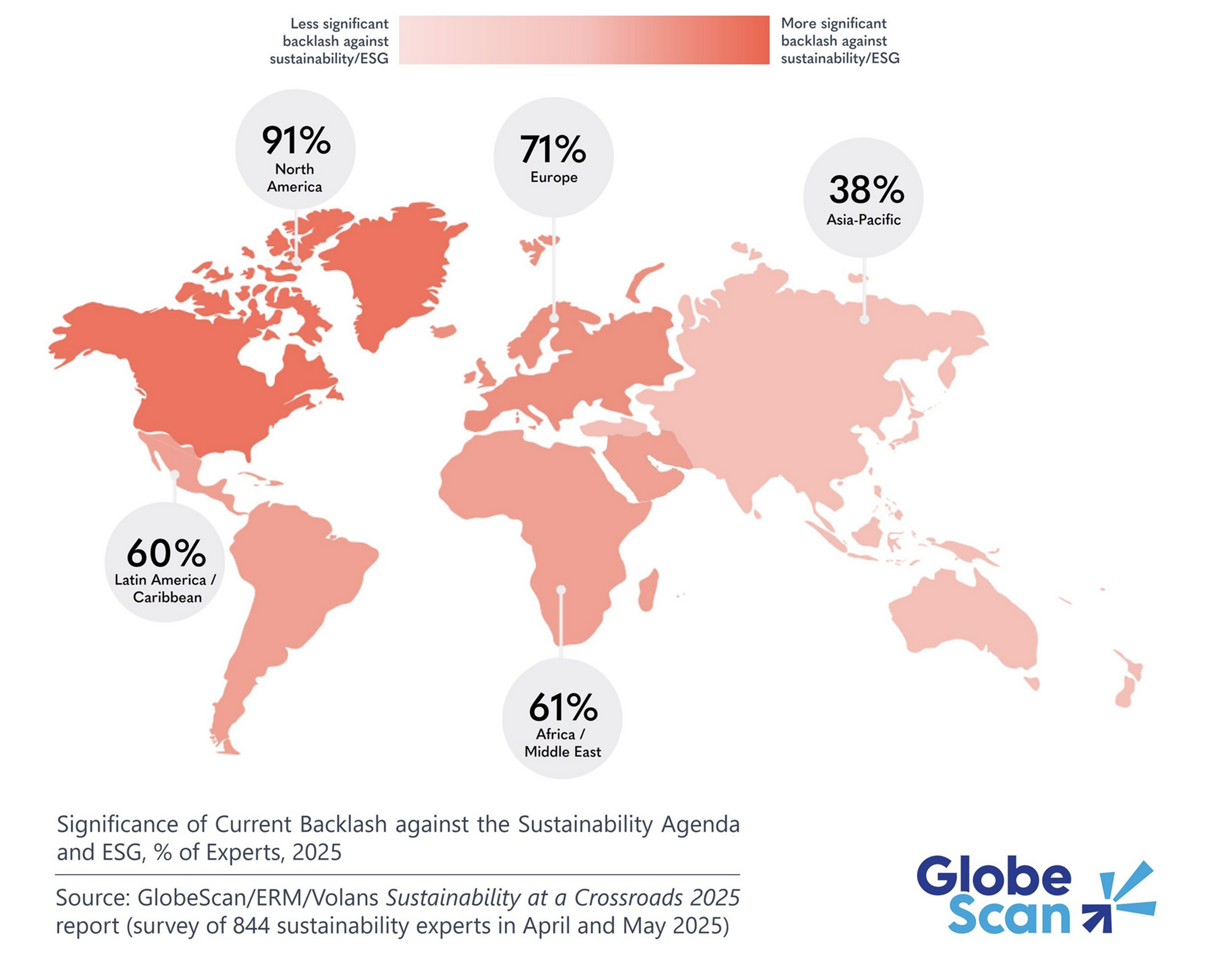
Are ambitions for sustainable development flagging? One thing is certain: a strong climate of uncertainty weighs on the agenda, fuelled by a rising tide of increasingly audible criticism. Professionals working in the field largely report a trend of rejection on these issues. According to a recent study conducted by GlobeScan, ERM and Volans, 71% of respondents in Europe attest to this. Unsurprisingly, the phenomenon is most pronounced in North America, the birthplace of this uninhibited backlash that surged in the wake of the U.S. election, where it reaches 91%. While the wave is less intense in the Asia-Pacific region, it appears to be sweeping across the Old Continent.
The picture is indeed striking, and this backlash is playing out across political and cultural arenas, as well as within the corporate sphere. Across the Atlantic, the trend is towards dismantling environmental regulations: the Environmental Protection Agency (EPA) has outright repealed anti-pollution rules, fundamentally challenging the acknowledgment that greenhouse gases pose a danger to health and the climate.
In Europe too, legislative ambitions have seen a clear setback, with reversals on certain measures of the European Green Deal through the Omnibus I package, involving the revision or easing of certain due diligence obligations (corporate responsibility for human rights, environmental impacts, etc.). In practice, flagship initiatives have been postponed or scaled back, such as the anti-greenwashing legislation or the implementation of the CSRD. Under political and economic pressure, environmental targets have been weakened, and additional deadlines granted to polluting sectors such as the automotive industry.
Source: GlobeScan/ERM/Volans Sustainability at a crossroads 2025
Significance of Current Backlash against the Sustainability Agenda.
This anti-ecological haemorrhage has also spread into the corporate world. While the situation remains mixed, with many organisations still strongly committed, signals of significant backtracking are accumulating. Under pressure from the US administration, which has tied public procurement to climate and diversity commitments, some companies have gone silent on these issues. Some communications have been removed or completely rewritten, as in the case of Walmart, or Kraft Heinz, which scrubbed from its website its pledge to cut emissions by 50% by 2030 — a phenomenon now known as "greenhushing," referring to the silence that surrounds corporate sustainability commitments.
The financial sector is not spared. This phenomenon has been particularly visible with the withdrawal of major financial players from collective pledges, notably those related to carbon emissions. The Net-Zero Banking Alliance (NZBA) has been among the most affected. The coalition of banks, convened under the United Nations and committed to aligning their lending and investment portfolios with a net-zero emissions target by 2050, had no choice but to cease operations last October following the departure of its members. This represents a major setback for green finance, as the coalition comprised 140 banks and USD 74 trillion.
Overall, according to Morningstar, global green investments declined over the past year. In addition, the 2025 Banking on Climate Chaos report indicates that the world’s 65 largest banks provided USD 869 billion in financing to fossil fuel companies in 2024. This represents a significant increase (+USD 162.5 billion compared with 2023), marking a turning point after several years of decline. The report notes that financial institutions overall ramped up their funding for polluting activities, with 45 of the 65 banks increasing fossil fuel financing in 2024.
These headwinds, blowing from political and economic spheres, seem to foster a certain resignation. Yet the backlash is far less evident on the citizens’ side…
A Battle of Narratives
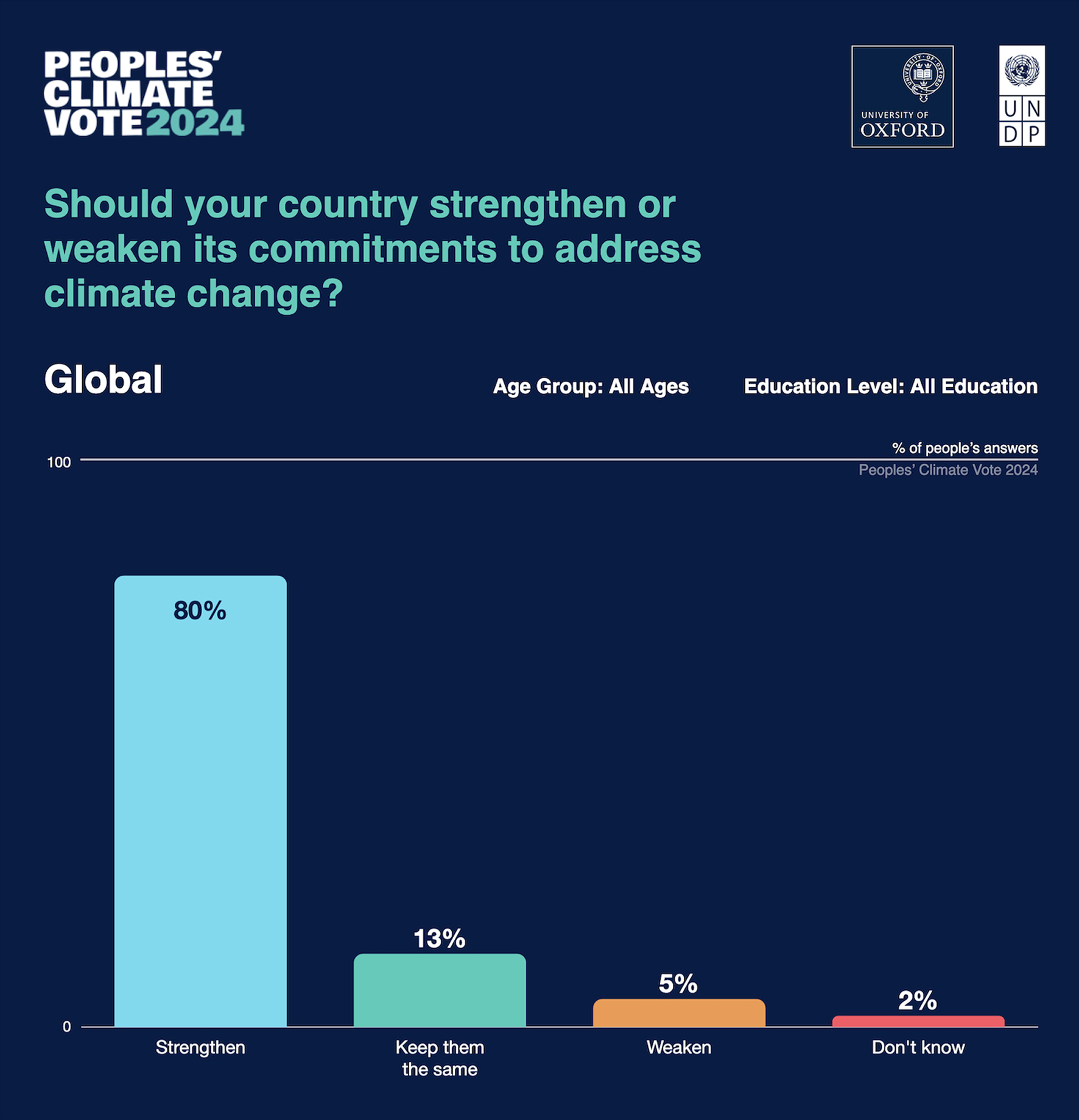
According to the Peoples’ Climate Vote, the largest global climate opinion survey, which polled over 73,000 people across 77 countries in 2024, the public is increasingly concerned about climate change, with 53% reporting greater worry than the previous year. Furthermore, 80% of respondents want their country to step up action on this issue (89% in developing countries), and 72% call for a rapid transition to renewable energy.
Environmental bashing is therefore not widely shared and appears to be the work of a very vocal minority. Yet the risk of contagion is real, as we know that prevailing narratives gradually take root, slowly embedding themselves in public consciousness. It is in the realm of narratives that the battle is being fought.
The fight over language is intense. To grasp its scale, one need only consider the funding bans imposed by the US administration based on the mere mention of prohibited terms such as "climate risks," "clean technologies," "climate models," "pollution," or even "science-based." Censorship is rampant. As the scientist and former co-chair of IPCC Working Group I Valérie Masson-Delmotte describes in the collective work GreenBacklash: "Being a climate scientist in the United States right now is a nightmare, particularly within federal agencies: censorship of climate change information on public websites, prohibitions on federal agency researchers freely communicating with scientists from other countries or speaking to the media, intimidation, and massive dismissals without notice or justification ('purges')."
Anti-environmental theses are seeking to gain ground, increasing their share of voice and visibility in the public sphere. They relentlessly spread a strategy of doubt and science denial across social media. The scale is undeniable: YouTube videos denying climate change, promoted by algorithms, generate USD 13 million in advertising revenue each year (Atlas of the Anthropocene, 2025). The backlash is indeed tech-boosted by Big Tech, which sees it as a way to continue development without regard for planetary limits. Rather than acknowledging their major responsibility on this issue, some even indulge in survivalist schemes on other planets. In this regard, they act as "engineers of chaos" or "predators," as described by Giuliano da Empoli in his recent works.
In short, as Valérie Masson-Delmotte points out, "censorship, making scientific knowledge inaccessible, and the spread of misinformation form a new technophile obscurantism."
In the face of this full-scale attack on environmental efforts, a resolutely positive narrative is imperative to escape fatalism, the pervasive gloom, and the sense of powerlessness that often accompanies it. This is exactly what futurist historian Mathieu Baudin invites us to do (see our interview on page 14) showing that, on the contrary, the unique period we are living through represents a remarkable historical opportunity.
Source: Peoples' Climate Vote 2024, UNDP and the University of Oxford
Should your country strengthen or weaken its commitment to combating climate change?
At a Crossroads
The prevailing discourse either takes the form of denial or fatalism, suggesting that the die is cast and that nothing can be done to change the situation. In reality, we are at a crossroads: the challenge is immense, but progress has been made in certain areas, demonstrating the relevance of efforts undertaken and confirming the need to redouble them. Concrete achievements deserve to be highlighted.
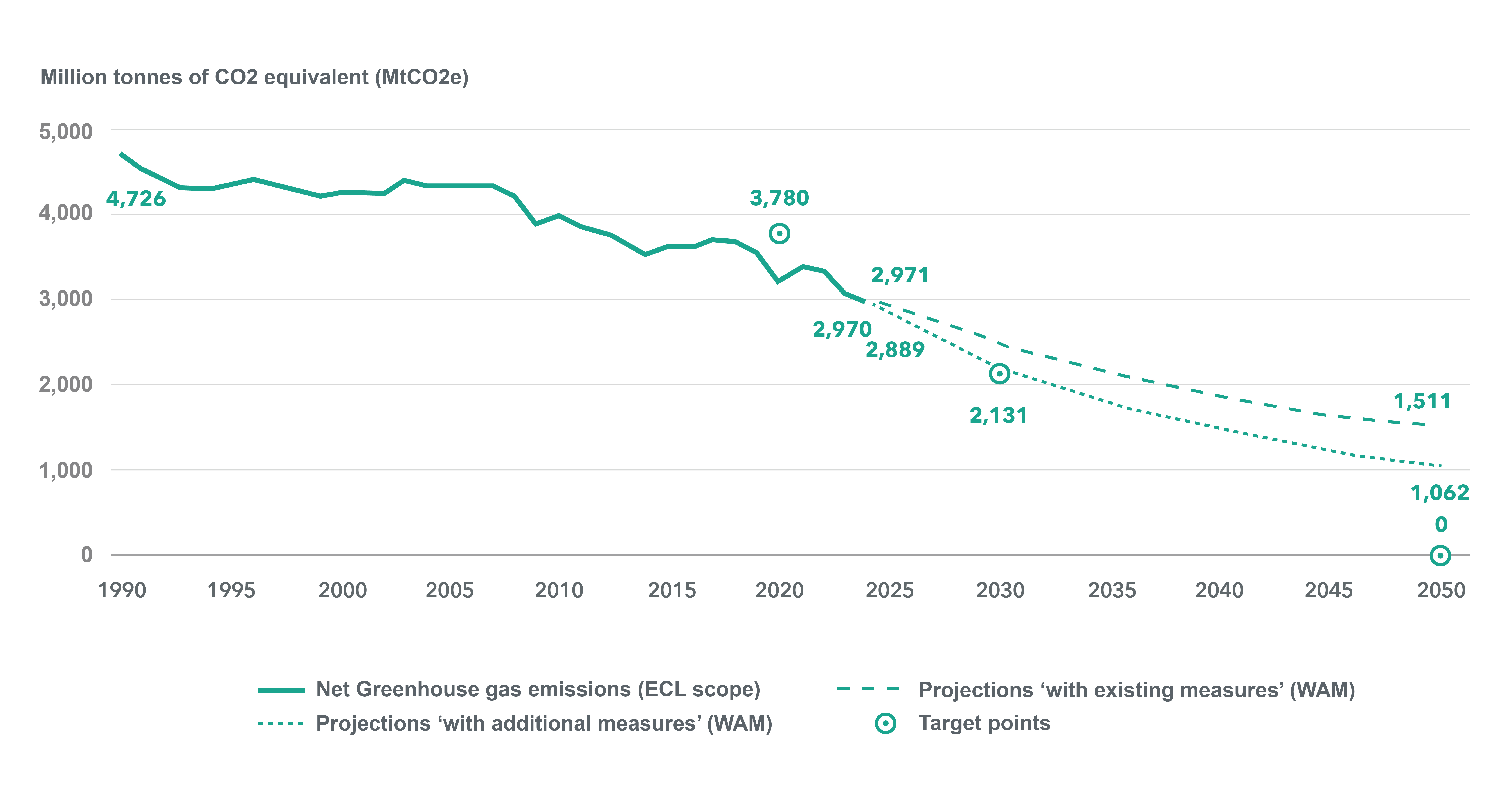
Among them is the reduction of the ozone hole, confirmed by the latest data following the ban and gradual phase-out of harmful substances. On the energy front, over 40% of the world’s electricity was produced from low-carbon sources in 2024, according to the Ember Global Electricity Review 2025. Europe has surpassed its emissions peak, with a 36% reduction in net greenhouse gas emissions between 1990 and 2023, according to the European Environment Agency. Naturally, many sources of concern remain, but these figures remind us of our capacity to make a difference. This responsibility falls on everyone, but particularly on businesses, which act as catalysts for change. Examples of organisations successfully implementing sustainable models are already here (see page 24). Their commitment is in fact directly linked to their economic resilience, as we have moved from viewing sustainability as a matter of responsibility to seeing it also as one of relevance and robustness of business models—especially in these turbulent times. Globally, the cost of the transition is estimated at 1.2 percentage points of GDP, compared with 15 points for inaction, underscoring the urgency of acting without delay.
Source: EEA
While the challenge remains immense, some data attest to the relevance of the efforts undertaken. Here, historical and future trends in net greenhouse gas emissions for the EU-27, alongside key targets for 2020, 2030, and 2050.
Above all, as Bertrand Piccard emphasises, it is crucial to outline constructive perspectives by focusing on desirable alternatives. "It is essential," he reminds us, "to explain that these are not just problems but also solutions. Rather than shouting ‘problems’ in the streets, let’s shout 'solutions'." (RTBF) It is through these concrete responses that we can bring people together and inspire action.
To be read also in the dossier "Facing Backlash, Staying the Course Towards Sustainability"