"We shouldn't underestimate what we're capable of changing"
Credit: IMS Luxembourg
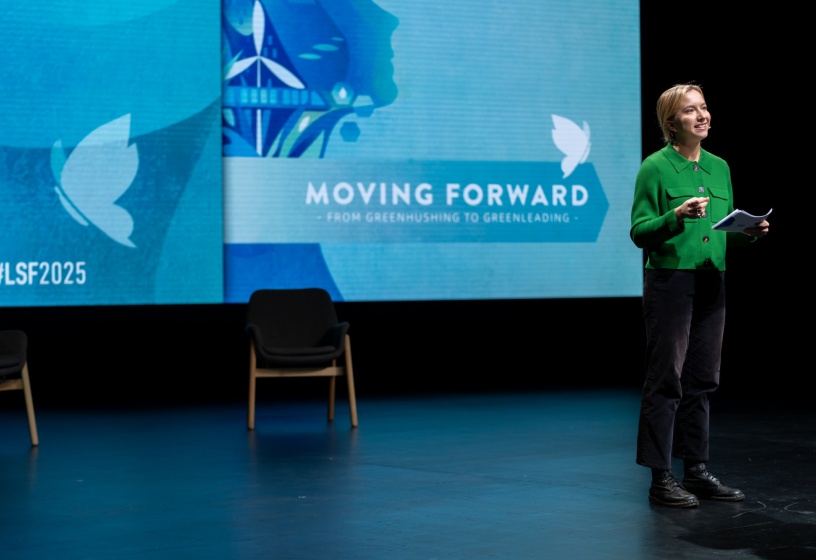
At the Luxembourg Sustainability Forum, climate activist Clover Hogan shared her thoughts on the current backlash on climate action with us. This interview gives an insight into her actions beyond her opening keynote on the 25th of November.
What are alternative narratives to climate anxiety that can inspire action?
Well, the first thing I would say is that feeling anxious about the climate crisis is a very rational and psychologically healthy response. In fact, I think part of the reason why we are in this situation is because people, particularly people in positions of power, have gotten very good at switching off their emotions. Equally, if you don't have an outlet for agency or clear pathways for channelling those emotions, they can tip over into despair or fatalism.
And so, I'd love to see alternative narratives that redistribute power and that help people remember we're not mere individuals carrying the burden of the world on our shoulders. We are part of collectives; we are part of communities, and we shouldn't underestimate what we're capable of changing. Because tremendous change is possible.
How do individuals lead businesses to a better world?
It is important for everybody to remember that impact comes from focus. So rather than trying to solve everything, people need to realise that their power comes from dialling in on one issue. The flip side of the interconnectedness of the problems that make up the climate crisis — from food to fashion, media to education and gender — is the fact that no matter what you care about, there is a role for you in solving something.
I think for CEOs, it is about realising that you are leaving behind a legacy. Many people in positions of power work their entire lives — they climb the ladder, they assume titles, they gain power — all to provide for their families, to have an impact on the world, but most importantly to hand over something meaningful to their children.
And then, as an employee, one of the biggest things you can do is to challenge business-as-usual. And there are many ways to do this: you can be the raging activist, or you can do it in a more subversive, strategic way… that may mean finding allies within your company.
Right now, there are some very loud populist figures who represent a small amount of society, trying to convince us that they represent the majority. But recent research has found that 89 % of people globally want their governments to take stronger action on climate. So, speaking out is an important mechanism of signalling to others that they are not alone.
Credit: IMS Luxembourg
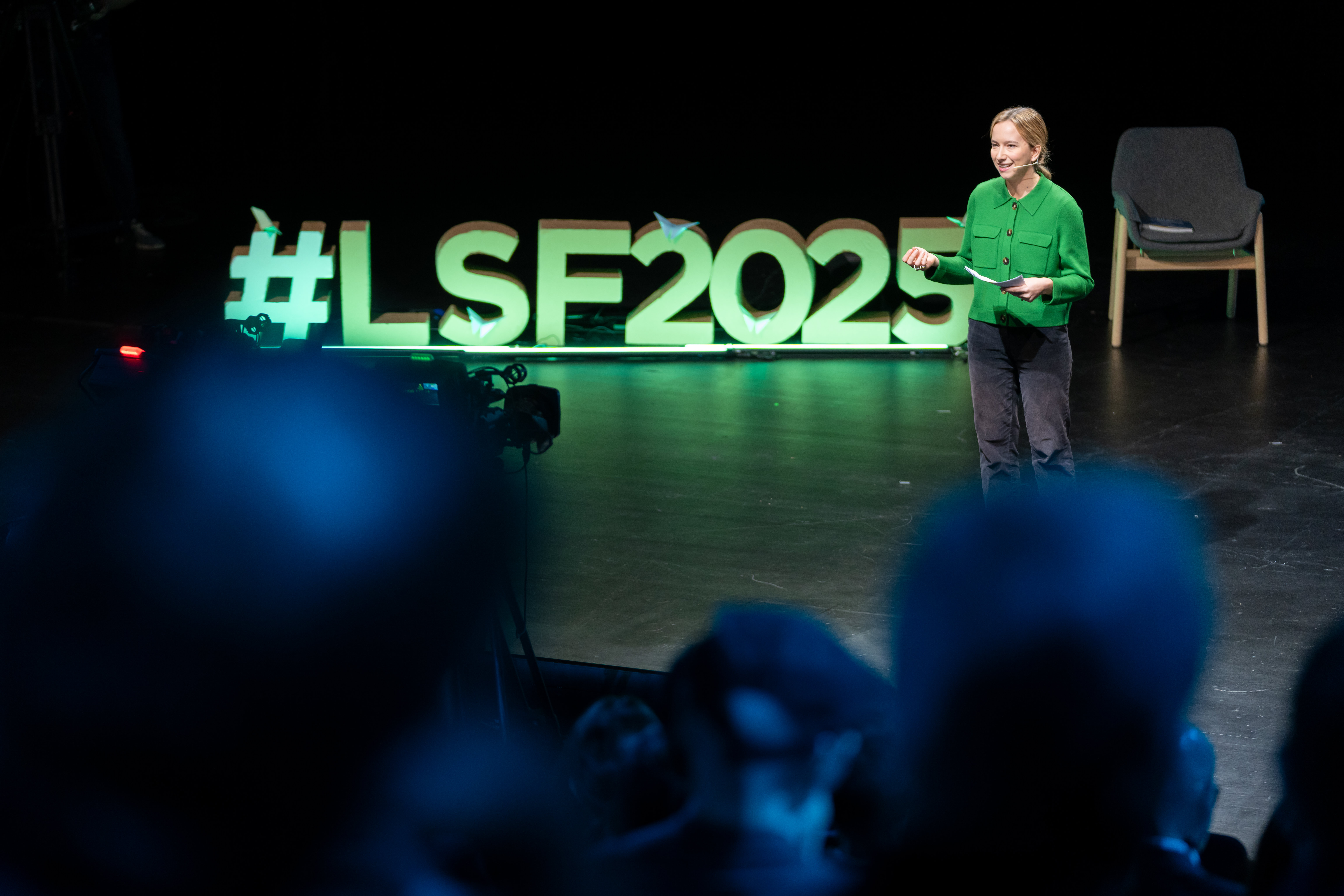
Clover Hogan at the Luxembourg Sustainability Forum 2025.
What is your reaction to statements such as "companies are the root cause of the climate crisis"?
The reason I first started working with companies is because I realised that there were good people working within them. When I started, it was easy to create dichotomies and say, "You're the problem and I'm going to fight you". So, it was really disarming when I first met some employees and I realised that we wanted the same things, but that we were taking very different routes. That being said, I’ve started to withdraw from these spaces; mostly because I began to realise the limitations of good intentions under capitalism. We saw that when Emmanuel Faber of Danone pushed a sustainability agenda and faced the guillotine. We saw it most recently with David Stever, CEO of Ben & Jerry’s, who stood up to Trump and defended a free Palestine and got pushed out by the board.
So then, what can businesses do against these statements and the current backlash?
Well, they have a responsibility to shift from a mentality from doing less harm to "how do we do more good". We need companies that prioritise sustainability before it's easy, before it's regulated, before it's profitable. There are so many SMEs, small family-run businesses, and B Corps, that genuinely live by their values and are showing that a different version of businesses is possible. We need more of that.
And the good news is that big companies can change the system. They do it every day through lobbying for their interests. So, industry-wide change is possible, but it is only going to happen when companies work together to move their entire industries along; when they retire the competitive mindset long enough to say, "If it’s not currently financially possible or easy to do, how do we make it so?" This is also where we desperately need regulation to force companies along, and there are glimmers of promising regulation in the EU: extended producer responsibility or digital product passports are leading the way, with France at the front on fashion regulation for example.
"We need companies that prioritise sustainability before it's easy, before it's regulated, before it's profitable"
What is more effective? Changing belief systems or taking actions?
I would say it is a little bit of both. What we observed at Force of Nature when we first started creating spaces for young people to share their feelings, was that it was a powerful way of helping them feel less alone. At the same time, research by the Climate Action Unit at UCL found that the most effective way of changing beliefs is to help people participate in an action – whether it is going to a protest or trying delicious plant-based food and realising that it tastes better than meat. Some of these actions can be facilitated by a welfare state, as Luxembourg demonstrates by providing free public transport for example. But then, companies also have a responsibility to foster action. And ultimately, I think it is the role of all of us as citizens to reclaim our agency and recognise that democracy is an everyday practice. So, it is on all of us.
Watch the replay of the Luxembourg Sustainability Forum with Clover Hogan here.
Clover Hogan
Clover Hogan is a climate activist and the founder of Force of Nature, a youth non-profit mobilising mindsets for climate action. She has worked alongside the world’s leading authorities on sustainability and consulted within the boardrooms of Fortune 50 companies. At 22 she was recognised on the Forbes 30 Under 30 list.
To be read also in the dossier "Facing Backlash, Staying the Course Towards Sustainability"